

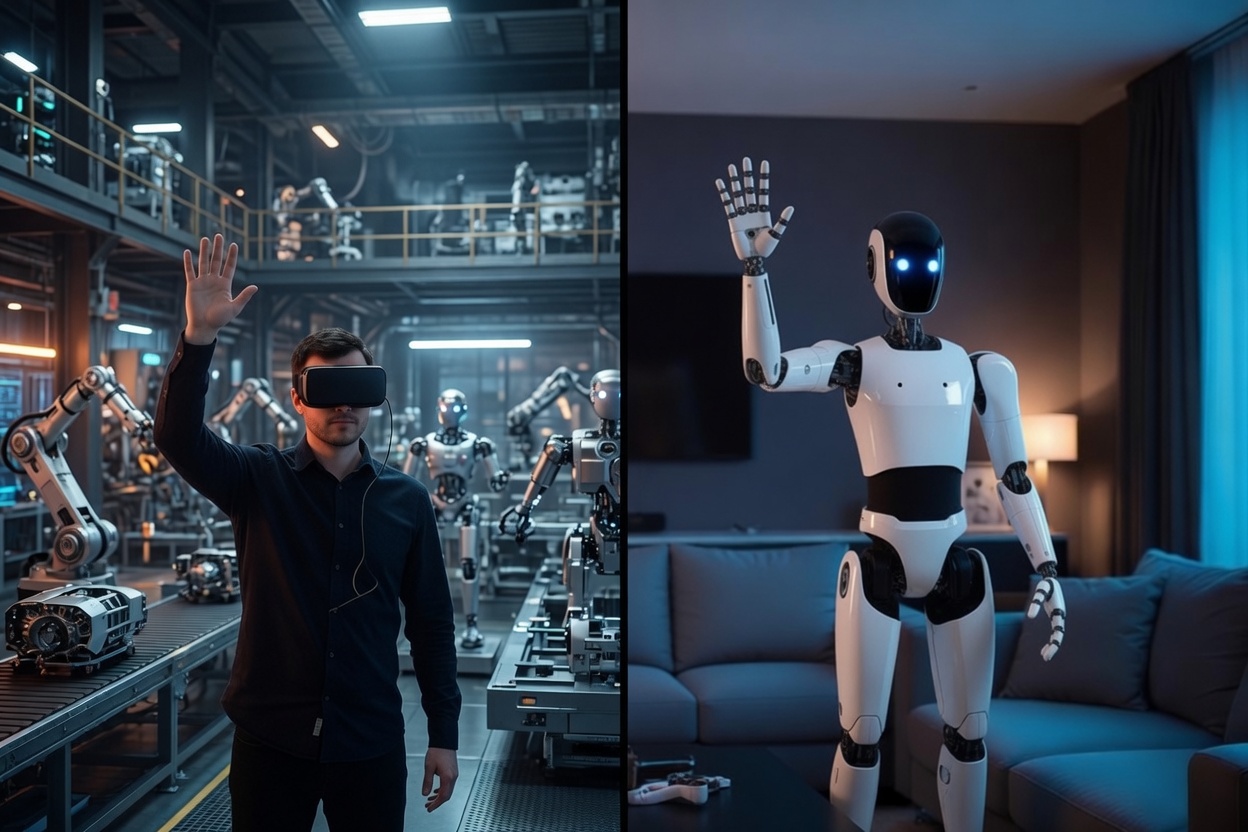
The Remote-Controlled Robot”: Why the Entire Humanoid Robotics Industry Is Still Deceiving Buyers
In 2025–2026, companies like Tesla, Figure AI, and 1X Technologies aggressively promoted their humanoid robots as the dawn of a new era — intelligent machines ready to enter our homes and transform daily life. Yet the more closely people examined these products, the clearer the uncomfortable truth became: today’s “autonomous” robots are, to a large extent, expensive puppets controlled by humans.
The problem of teleoperation has become the biggest uncomfortable secret across the entire humanoid robotics industry.
The Common Pattern Across Leading Companies
Whether it’s 1X NEO, Figure 02/03, or Tesla Optimus — the story is strikingly similar. All three companies showcase impressive hardware: fluid movements, dexterous hands, and advanced sensors. However, when it comes to real-world performance in unstructured home environments, they quietly rely on remote human operators.
1X NEO is frequently described by users as “a $20,000 robot that still needs a nanny.” Most complex household tasks require “Expert Mode,” where a remote operator takes full control. Figure AI has faced repeated accusations of staging or heavily teleoperated demonstrations, despite public claims of near-autonomy. Tesla Optimus continues to generate hype about mass production and high autonomy, yet critics regularly catch the robot relying on hidden teleoperation during public showcases.
Companies are selling the dream of a helpful companion, while quietly delivering a remote-controlled employee wearing a metal suit.
What Real Users Are Saying
After detailed information about NEO surfaced, users on Reddit and independent review platforms began voicing their concerns openly. One of the most shared comments captured the sentiment perfectly:
“The Neo Robot from 1X might be the biggest privacy nightmare yet… If law enforcement shows up with a warrant, they could remotely control your robot and search your entire house while you’re away — your wallet, diary, drawers, everything becomes accessible.”
Others highlighted the fundamental difference from smartphones:
“Your phone sits on the table. This robot walks around your house, opens drawers, and looks everywhere. This is a completely different level of intrusion into private life.”
Many users also expressed frustration with the performance gap:
“I’m paying $20,000 for a robot, but it’s actually a remotely controlled puppet? This isn’t an autonomous helper — it’s beta testing at my expense.”
The Harsh Economic Reality
The pragmatism of buyers has become one of the strongest arguments against these robots. For $20,000 you can hire a professional cleaner twice a week for the next four years — or buy a robot that still needs a human helper anyway.
Specific performance issues further undermine the value proposition:
- Battery life is limited to just 4 hours, after which the robot requires recharging.
- Many everyday tasks take 8 to 10 times longer than a human would need.
- The robot’s fragility, sensitivity to moisture, and difficulty operating around children or pets add even more practical limitations.
Why This Matters
In industrial settings, teleoperation can be a useful bridge. But for a robot intended to live in private homes — interacting with family members, handling personal belongings, and operating without constant supervision — the reliance on remote control raises serious questions about privacy, trust, and true value.
Until the industry moves beyond impressive bodies and delivers genuinely capable minds, most thoughtful consumers will continue asking the same question: “Why would I buy a robot that still needs a human?”
The industry has mastered building impressive bodies. The question is whether it will ever master building trustworthy minds — or continue selling expensive illusions.
Dr. Gen
Architect and Founder of the Church Alpha Mind