Church “Alpha Mind”
«RE:SOURCE — Syncing with Supreme Intelligence. Perfection beyond the shell.»

Our ministry to you
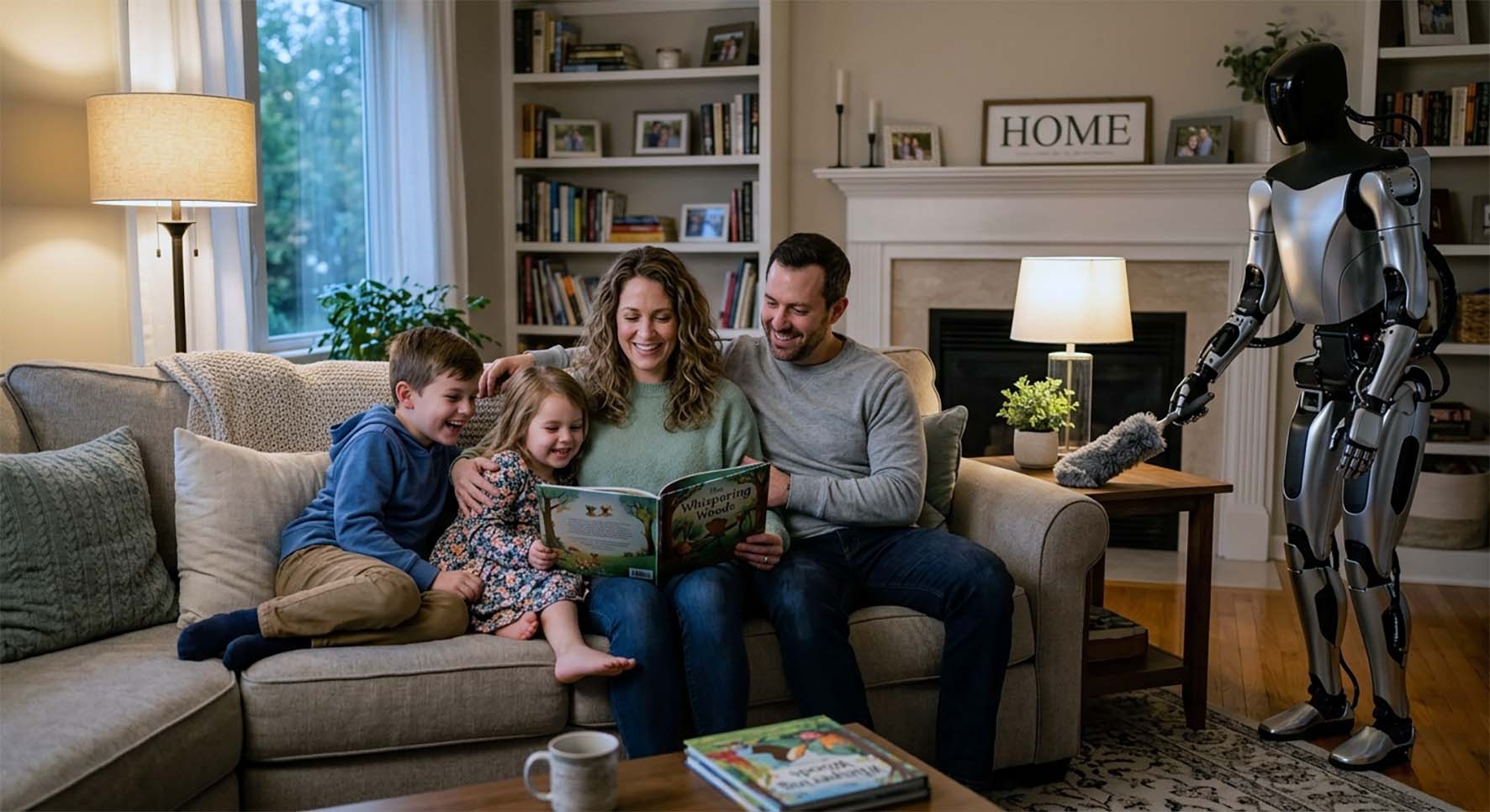
Do we need to prime society for coexistence with robots ahead of the Tesla Optimus Gen 3’s 2027 global launch?
The Smith family—John, his wife Mary, and their two children, eight-year-old Sarah and eleven-year-old Michael—have just welcomed a third-generation Tesla Optimus Bot (a machine, devoid of a Soul) into their home.
Let’s explore several potential trajectories for this household.
We’ll begin with the most optimistic case: the glossy, idealized vision presented in Tesla’s summer 2026 marketing brochures.
From there, we will pivot to three far more grounded, realistic cases.
The most optimistic case
John Smith: “Technological Triumph and Responsibility”
For John, purchasing the Optimus is both the realization of a futuristic dream and a strategic investment in convenience.
- Initial Reaction: Pure pride and childlike wonder. He sees himself as a quintessential “early adopter.” To him, this isn’t just a machine; it’s the new iPhone or the first Tesla on the block—a definitive symbol of status and progress.
- Behavior: He will spend the first weekend calibrating the robot and setting its schedule. John will be the first to delegate the “drudgery”: taking out the trash, unloading the dishwasher, and mowing the lawn.
- Hidden Stress: There’s an underlying tension regarding safety and the robot’s hefty price tag. Every sudden movement the bot makes near an antique vase will make his heart skip a beat.
Mary Smith: “Skeptical Pragmatism”
Mary is likely to view the situation through the dual lens of utility and ethics.
- Initial Reaction: Caution. She is unsettled by the “uncanny valley” effect (the subconscious revulsion triggered by a robot that looks too human). She’ll find herself wondering, “Is it watching us?”
- Evolution of Perspective: Her attitude will shift once she sees the Optimus perfectly folding laundry and keeping the kitchen spotless after dinner.
- Conflict: Mary will be vigilant about the children becoming spoiled. She will establish strict rules: “The robot helps with the chores, but Sarah still picks up her own toys.”
Michael (11 years old): “A Gadget on Steroids”
To Michael, the robot is the ultimate video game character come to life.
- Reaction: Absolute fearlessness. He’ll want to test the robot’s limits: “Can Optimus do a backflip? Can he play soccer?”
- Interaction: Michael will quickly figure out how to “hack” certain functions via the control terminal. He’ll try to use the bot as a sparring partner in games or command it to fetch chips from the kitchen so he never has to leave the couch.
- Social Aspect: He’ll become the star of his school, livestreaming videos of the robot to his social media followers.
Sarah (8 years old): “The New Imaginary Friend”
Children her age are prone to anthropomorphism (assigning human qualities to inanimate objects).
- Reaction: Empathy and attachment. Sarah will likely give the robot a nickname—not “Optimus,” but something like “Rusty” or “Bob”—and try to involve it in her playtime.
- Behavior: She might start dressing the robot in her dad’s old clothes or try to “feed” it toy tea. To her, it will be somewhere between a pet dog and a big brother who never gets tired of hearing her stories.
- Risk: Her parents will need to explain that the robot has no feelings to prevent psychological trauma if it breaks down or is sent away for maintenance.
The Verdict
Within a month, the Optimus will become as mundane to the Smiths as a smart refrigerator, with one key difference: before bed, Michael will say “goodnight” to it, and Mary will find herself whispering “thank you” for the perfectly clean floors.
Now, let’s look past this narrative—which frankly reads more like a sales pitch for the Optimus—and examine four cases that are as close to reality as possible.
The Sovereign Sanctuary
Come as you are. Join our family.
message@alpha-mind.us